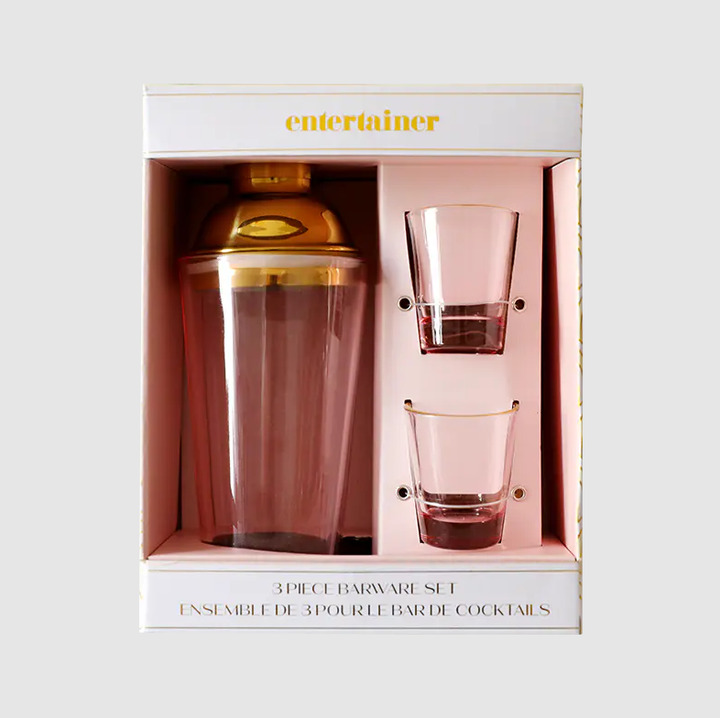
When bartenders and beverage enthusiasts discuss equipment choices today, the conversation often turns toward the mixology cocktail kit and the professional cocktail kit as practical foundations for consistent drink preparation. Rather than being treated as decorative gift sets, these kits are increasingly viewed as working tool systems that support workflow, accuracy, and repeatable results in both commercial and home environments.
A well-assembled cocktail kit reflects an understanding of how drinks are actually prepared, not just how they are presented. The presence of core tools—such as shakers, strainers, jiggers, bar spoons, and muddlers—signals an emphasis on process rather than appearance. Each tool has a defined role, and the way these components interact determines how smoothly a bartender can move from one step to the next during service or practice.
Shaker selection often becomes the first point of evaluation. In professional settings, weight balance and seal reliability matter more than decorative finishes. A shaker that closes securely reduces spillage and allows controlled agitation, while appropriate wall thickness helps manage temperature transfer during shaking. These considerations apply equally to home users who want predictable outcomes, even if the pace is slower and the setting more relaxed.
Jiggers, though small, play a central role in drink consistency. Many modern professional cocktail kit configurations include dual-sided jiggers with clearly etched measurement lines. These markings support accurate pours without forcing the user to pause or double-check volumes. Over time, this precision becomes part of muscle memory, allowing bartenders to focus on timing and interaction rather than constant recalculation.
Strainers are another component that reveal the intent behind a kit’s design. Hawthorne strainers with flexible springs adapt to different shaker sizes, while fine mesh strainers help manage texture in drinks that require a smoother finish. The inclusion of both types in a mixology cocktail kit suggests a practical understanding of varied drink styles rather than a one-size-fits-all approach.
Material choice also influences how a kit performs over extended use. Stainless steel remains common due to its resistance to corrosion and its neutral interaction with acidic ingredients. However, surface finish can affect grip and cleaning routines. Brushed finishes tend to show fewer fingerprints, while polished surfaces may be preferred for presentation-focused environments. Neither choice is inherently superior; the decision often reflects the intended working context.
Bar spoons deserve attention beyond their appearance. Length, balance, and handle design affect stirring efficiency, particularly for drinks built directly in mixing glasses. A properly weighted spoon allows smooth rotation without excessive wrist movement, supporting controlled dilution. When included thoughtfully, this tool contributes to consistency across repeated preparations.
Muddlers, often underestimated, illustrate the balance between force and finesse. A muddler that is too light may require excessive pressure, while one that is too heavy can damage delicate ingredients. Professional kits often favor designs that distribute force evenly, allowing herbs and fruits to release aromas without being crushed into pulp.
Beyond individual tools, the organization of a cocktail kit affects usability. Storage cases or stands that allow quick identification of tools reduce downtime between tasks. For home users, this organization also encourages regular practice by making tools accessible rather than hidden away. Accessibility often determines whether a kit becomes part of a routine or remains unused.
Training and skill development are closely linked to equipment familiarity. Using a consistent professional cocktail kit helps users refine technique through repetition. When tools respond predictably, adjustments can be made based on taste and texture rather than compensating for equipment limitations. This relationship between tool reliability and skill progression is often overlooked but plays a significant role in long-term improvement.

Inspire creativity, unleash adventure, and foster connections, all while exploring the world! Geostalgia.com is your American Made Social Network. No Billionaire's are involved with the creation of Geostalgia.
