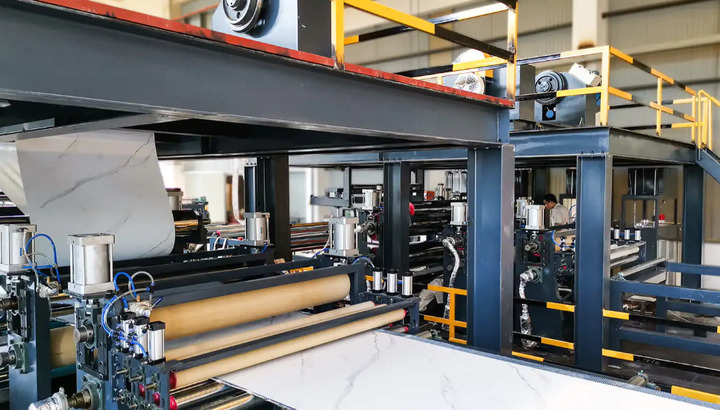
The Coil Coating Line and ACP Line are frequently discussed together in modern metal and composite panel production, as both systems focus on surface treatment consistency and process coordination. Rather than operating as isolated units, these lines often function as part of a broader manufacturing workflow where coating quality, material handling, and process timing influence downstream fabrication results. By understanding how these two production lines are positioned within industrial settings, manufacturers can better align equipment selection with practical production goals.
A Coil Coating Line is generally designed to apply organic coatings to metal coils in a continuous and controlled manner. The process typically includes unwinding, cleaning, chemical pretreatment, coating application, curing, and recoiling. Each stage must be balanced to maintain surface uniformity while supporting stable throughput. When the coated metal is later used as a facing material in aluminum composite panels, compatibility with the ACP Line becomes an important consideration.
An ACP Line focuses on laminating coated aluminum sheets with a core material to form composite panels. The incoming aluminum surface quality directly affects bonding reliability and panel appearance. For this reason, coordination between Coil Coating Line output specifications and ACP Line process requirements is often addressed during early production planning stages. Thickness tolerance, coating adhesion, and surface energy are among the shared parameters that influence both lines.
From a production layout perspective, Coil Coating Lines usually occupy significant floor space due to their linear process design and curing ovens. ACP Lines, while also sizable, tend to emphasize alignment accuracy, pressure control, and temperature stability during lamination. When both lines are installed within the same facility, material flow planning becomes a practical topic rather than a theoretical one. Manufacturers often design buffer zones or intermediate storage systems to manage scheduling differences between coating and panel lamination.
Operational stability is another shared concern. Coil Coating Lines rely on consistent line speed and coating viscosity to maintain surface uniformity. ACP Lines, on the other hand, depend on synchronized feeding systems to avoid panel distortion or bonding inconsistencies. Although the technical focus differs, both systems benefit from automation strategies that reduce manual intervention while allowing fine adjustments when material specifications change.
In terms of application range, coated coils produced by a Coil Coating Line may serve multiple downstream uses, including ACP production, roofing sheets, and appliance panels. This versatility means coating formulations are often selected with multiple processes in mind. ACP Lines then narrow the focus by adapting these coated materials specifically for composite panel structures used in architectural or signage applications. The relationship between the two lines reflects a balance between general-purpose coating capability and application-specific panel assembly.
Maintenance planning also shows similarities and differences. Coil Coating Lines require regular attention to rollers, coating heads, and curing systems to prevent surface defects. ACP Lines place emphasis on press rollers, heating units, and alignment mechanisms. While maintenance tasks differ, both systems benefit from preventive schedules that reduce unexpected downtime and preserve consistent output quality.

Inspire creativity, unleash adventure, and foster connections, all while exploring the world! Geostalgia.com is your American Made Social Network. No Billionaire's are involved with the creation of Geostalgia.
