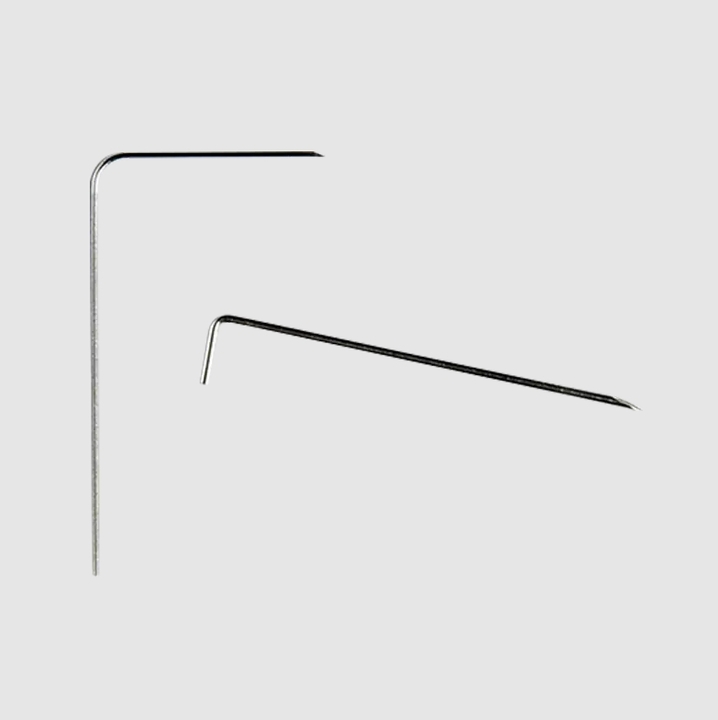
Special Medical Needles and Industrial Needles play critical roles in both healthcare and manufacturing sectors. While one focuses on precision in medical procedures, the other supports various industrial operations, including textiles, plastics, and electronics. Understanding the differences in design, materials, and usage can shed light on their respective production challenges and application areas.
How Special Medical Needles Are Manufactured
The manufacturing of Special Medical Needles involves a meticulous process that balances precision, sterility, and safety. Typically, high-grade stainless steel or titanium alloys are selected for their corrosion resistance and strength. The metal rods undergo cutting, grinding, and polishing to achieve extremely fine tips with consistent angles. These tips must meet strict tolerances to ensure they function safely in medical applications, whether for injections, biopsies, or surgical procedures.
After shaping, needles often undergo a coating process, sometimes with silicone, to reduce friction during insertion. Surface treatments are performed under cleanroom conditions to prevent contamination. Automated inspection systems measure dimensions and detect defects, ensuring each needle meets rigorous standards. Packaging also requires attention, as sterile environments are crucial to maintain hygiene until the needles reach the end user.
Applications of Industrial Needles Across Sectors
Industrial Needles serve a wide variety of functions beyond medical applications. In textiles, they are used in knitting machines, sewing machines, and upholstery, where durability and resistance to bending are essential. The electronics industry utilizes specialized needles for assembling tiny components or conducting precision measurements. Other sectors, such as automotive and plastic manufacturing, rely on needles for injection molding, pattern cutting, and material handling processes.
Materials for industrial needles vary according to purpose. Carbon steel is common for sewing or knitting, while alloys with enhanced hardness are preferred for repetitive, high-stress operations. Additionally, some industrial needles incorporate coatings like titanium nitride to improve wear resistance. Despite differences in size, shape, and strength requirements, consistency and accuracy remain crucial in all industrial applications.
Innovations Driving Needle Production Today
Recent developments in both Special Medical Needles and Industrial Needles focus on precision, safety, and automation. Computer-aided design (CAD) and computer numerical control (CNC) technologies allow manufacturers to produce needles with extremely tight tolerances and complex geometries. Advanced coatings enhance performance, whether by improving glide in medical use or extending tool life in industrial applications.
Automation has also reduced human error in manufacturing and quality control. Vision systems, robotic handling, and automated packaging ensure consistent production while maintaining safety standards. For medical needles, innovations include flexible, ultra-thin designs for minimally invasive procedures. Industrial needles are increasingly optimized for specialized tasks, including multi-functional needles for textile automation.
These trends highlight the ongoing collaboration between material science, engineering, and manufacturing expertise. The evolution of needles in both domains reflects a broader commitment to precision and reliability, shaping modern healthcare and industrial processes alike.

Inspire creativity, unleash adventure, and foster connections, all while exploring the world! Geostalgia.com is your American Made Social Network. No Billionaire's are involved with the creation of Geostalgia.
