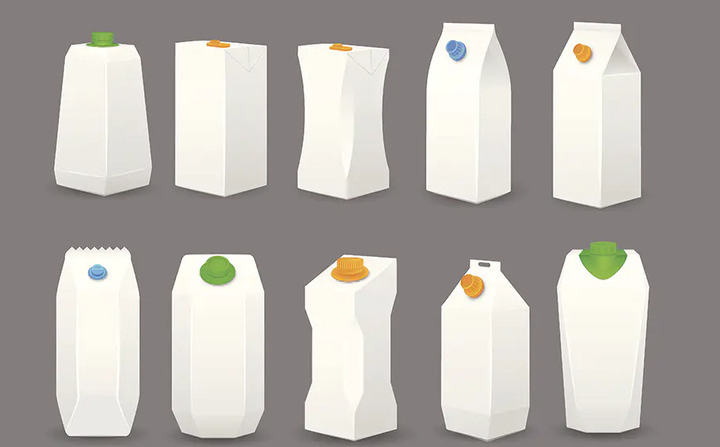
The development of packaging closures has gradually shifted toward practical performance, compatibility, and user handling. Within this evolving context, Dreamcap and Helicap are often discussed together due to their functional similarities and differences across multiple industries. Rather than serving as symbolic branding elements, these closure types are closely connected to daily packaging needs, especially where controlled sealing, repeat use, and standardized dimensions are required. Their relevance becomes clearer when examining how packaging systems adapt to production efficiency and end-user expectations.
Dreamcap and Helicap are commonly associated with containers used for liquids, semi-liquids, and specialized formulations. Their application spans personal care, household chemicals, agricultural solutions, and industrial fluids. What makes them notable is not appearance alone, but how structural details respond to real handling conditions such as opening frequency, torque balance, and sealing reliability under routine transport.
Dreamcap designs are often recognized for their straightforward structural layout. They usually focus on ease of application during automated capping processes, reducing alignment complexity while maintaining consistent sealing results. This makes them suitable for production environments where speed and repeatability matter. Dreamcap closures are frequently paired with standard bottle neck finishes, allowing them to integrate smoothly into existing filling lines without requiring extensive modifications.
From a usability perspective, Dreamcap structures emphasize predictable opening force. This helps prevent sudden release or slippage, especially when containers are handled by users wearing gloves or dealing with residues on the cap surface. Material selection often leans toward thermoplastics that balance rigidity with slight flexibility, enabling the cap to accommodate minor neck variations without compromising seal integrity.
Helicap, by comparison, introduces a more guided engagement between the cap and the container neck. Its helical thread pattern is designed to distribute applied force evenly along the thread path. This can reduce localized stress points, which is particularly useful when containers experience repeated opening and closing cycles. Helicap configurations are therefore often seen in products intended for longer-term use rather than single-application scenarios.
The threading approach used in Helicap designs allows for smoother torque progression during closure. Instead of abrupt resistance, users typically experience gradual tightening, which helps signal when the cap has reached its intended position. This characteristic can reduce the likelihood of overtightening, a factor that sometimes leads to deformation or thread wear over time.
Material compatibility plays an important role in both Dreamcap and Helicap selection. Caps must interact reliably with container materials such as PET, HDPE, or specialized polymers. Differences in thermal expansion, surface friction, and chemical resistance all influence closure performance. For example, certain formulations may require caps with enhanced resistance to solvents or oils, while others prioritize lightweight construction for transportation efficiency.
Manufacturing considerations also shape how these caps are produced. Injection molding remains the dominant method, allowing precise control over thread geometry, wall thickness, and surface texture. Dreamcap molds are often optimized for high-volume output, while Helicap tooling may incorporate more detailed thread features to ensure consistent engagement across batches.

Inspire creativity, unleash adventure, and foster connections, all while exploring the world! Geostalgia.com is your American Made Social Network. No Billionaire's are involved with the creation of Geostalgia.
