Posted by Owen Marchand
Filed in Arts & Culture 7 views
The enduring pull of *Fallout 76* lies not just in its quests or combat, but in a more fundamental promise: the promise of a map filled with secrets. Unlike linear narratives, the game offers a sprawling, dense rendition of West Virginia that rewards the simple, joyous act of walking towards a distant landmark just to see what's there. This is a world built for wanderers, where every ridge, ruined highway, and suspicious cave mouth beckons with the potential for discovery, weaving a spell of cartographic temptation that fuels hundreds of hours of play.
From the moment one exits Vault 76, the game masterfully employs visual telegraphing. A strange rock formation, a flickering light in a distant valley, or the ominous silhouette of a radio tower against the greenish sky all serve as siren calls. The compass and map are deliberately sparse at first, revealing details only as you approach them. This design philosophy actively discourages fast-traveling from the outset and instead incentivizes traversal. You plan a route to a marked quest, but along the way, you are diverted by a half-collapsed homestead, a pre-war red rocket station overgrown with glowing fungus, or the eerie sounds emanating from a deep sinkhole. The journey consistently outweighs the destination, as each detour adds a new marker, a new snippet of lore, or a valuable resource node to your personal map.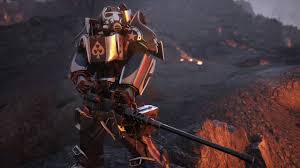
This exploration is deeply tied to the core gameplay loop of **scrapping**. The world is not merely a scenic backdrop; it is a giant, interactive repository of raw materials. That distant factory isn't just a landmark; it's a potential trove of steel, aluminum, and circuitry. A haunted-looking forest might be the best source for specific types of wood. This transforms aimless wandering into a purposeful harvest. The environment is constantly evaluated through a dual lens: is it interesting, and what can I take from it? The iconic "junk" items—desk fans, typewriters, toy cars—become landmarks in themselves, small treasures spotted across a cluttered room that promise progression back at your C.A.M.P.
Furthermore, the map is layered with intentional **lore**. Exploration is the primary way to engage with the game's deepest stories. You don't just learn about the Order of Mystery; you find their hidden lair, piece together their failed missions from terminals, and claim their gear. The tragedy of the Free States is uncovered by exploring their scattered, paranoid bunkers. The environmental storytelling—skeletons arranged in poignant scenes, abandoned notes, audio logs—is a reward reserved for those who venture off the beaten path. The game trusts players to be curious, and it fills every corner of its world with something to satisfy that curiosity, whether it's a breathtaking vista, a chilling tale, or a crate full of much-needed supplies.
Fallout 76 Bottle Caps succeeds as a vast, tangible space to get lost in. The compulsive need to "clear the fog of war" from the map is a powerful driver. It taps into a primal gaming instinct: to see every pixel of the world the developers built. Each play session becomes a choice between pursuing a concrete objective or simply picking a direction and satisfying an itch—the itch to see what’s over the next hill, in the next basement, or at the end of that crumbling pier. In Appalachia, the greatest reward is often not an item, but the discovery itself.

Inspire creativity, unleash adventure, and foster connections, all while exploring the world! Geostalgia.com is your American Made Social Network. No Billionaire's are involved with the creation of Geostalgia.
